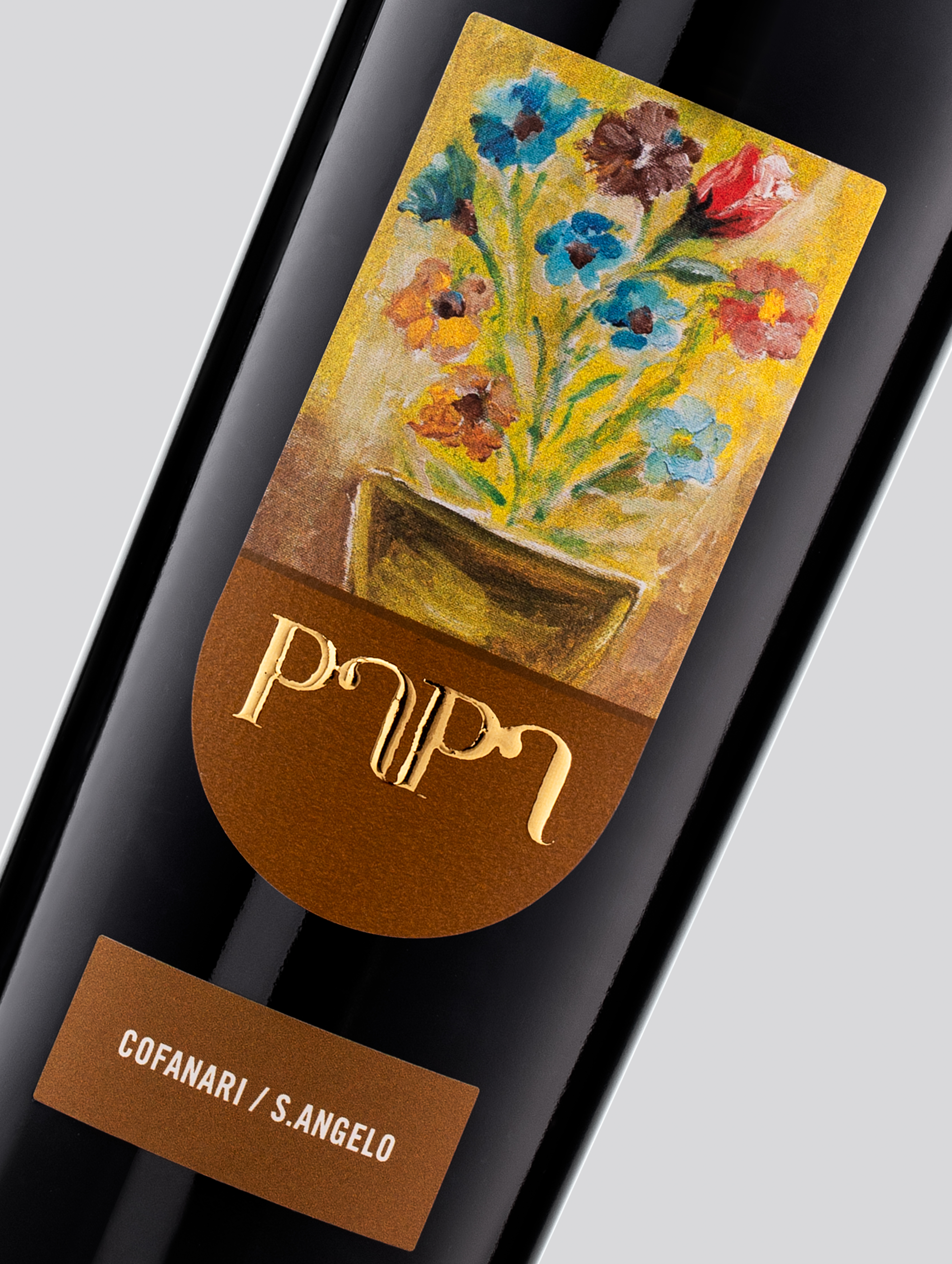
Falciano del Massico / Location: Collina Cofanari, Collina S. Angelo
Label: “I QUADRI Selection from 2 Micro Crus”
Age of the vines:
Approximately 30 years.
Vines per hectare:
Approximately 5,000/ha
Planting distance and training system:
2.10 x 0.90 espalier trained with low Guyot
Soil type:
Foothill. Cofanari: compact clay on the surface with rich skeletal components. S. Angelo: pyroclastic substrate mixed with sand.
Altitude:
Cofanari: 120 mt slm, S.Angelo: 280 mt slm
Processing:
Manual. No chemical weeding. Treatments: conversion to organic. Fertilization: green manure and manure.
Harvest period:
Early/mid-September. Manual harvest of the grapes in 18 kg crates. Careful selection of bunches.
Max. grape/wine yield:
55/60 quintals grapes / wine: 60%
Vinification:
Grape sorting. Subsequent selection of the berries before the hopper. This is followed by soft crushing and destemming and fermentation for approximately 10 days in stainless steel. Soft pressing in a wooden press and subsequent malolactic fermentation in stainless steel.
Aging on the lees:
1 month on the first lees, then racking and return to stainless steel for 5 months
Bottling:
Pre-Bottling Phase: Natural racking. Unfiltered and unclarified. Bottling 12 months after the start of fermentation.
“Nomen omen,” as they say, because it celebrates an important moment in the history of the Massico, 121 BC, when the consul Opimius administered the districts of this area and, also dabbling in wine production, made it his symbol of power. “Opimiano” over time became synonymous with a red wine produced in ancient Rome, particularly the wine produced during the harvest of 121 BC, under the consulate of Opimius. It was a wine renowned for its age and was served on special occasions, such as the “Trimalchio dinner” banquet described in Petronius’ Satyricon.
“I broke off a piece of thin focaccia, I drained a jug of wine: my lunch. Now I gently vibrate my lyre of love, I serenade my girlfriend.”
Color: Ruby Aroma: fruity, elegant, versatile, with notes of sweet spices and red fruits Taste: full, enveloping Serving temperature: 16/18 C°
We use cookies on our website to give you the most relevant experience by remembering your preferences and repeat visits. By clicking “Accept All”, you consent to the use of ALL the cookies. However, you may visit "Cookie Settings" to provide a controlled consent.
This website uses cookies to improve your experience while you navigate through the website. Out of these, the cookies that are categorized as necessary are stored on your browser as they are essential for the working of basic functionalities of the website. We also use third-party cookies that help us analyze and understand how you use this website. These cookies will be stored in your browser only with your consent. You also have the option to opt-out of these cookies. But opting out of some of these cookies may affect your browsing experience.
Il rispetto della tua privacy è la nostra priorità.
Di seguito puoi impostare le preferenze sul consenso e determinare come desideri utilizzare i dati in base alle finalità. Puoi impostare le tue preferenze per noi indipendentemente da quelle dei partner di terze parti. Ogni finalità ha una descrizione in modo che tu sappia come noi e i nostri partner utilizziamo i tuoi dati.